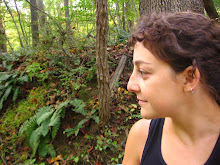
It's that time again! The school year is about to begin in Nicaragua, and once again I am hoping to help one of my former neighbors in Granada continue her education. Kasandra is a 14 year old high school student. She takes school seriously, earning excellent marks and the respect of her family. However to continue her education, Kasandra must pay $260 in tuition and uniform fees. Additional school materials cost even more. Meanwhile, her family is lucky to earn half that in a month -- and this is just the cost of public school.
Please help me sponsor Kasandra by making a donation to La Esperanza Granada, a wonderful organization that I have worked with in the past, which will make sure that every cent of your gift goes towards Kasandra's education fund.
Thank you for your support!
Please note: you do not need to have a PayPal account in order to donate.
Monday, January 31, 2011
Friday, January 22, 2010
I Can't Say It Better Myself...
Read the whole article here
http://motherjones.com/media/2010/01/when-media-disaster-haiti-looting
An excerpt:
http://motherjones.com/media/2010/01/when-media-disaster-haiti-looting
An excerpt:
Imagine, reader, that your city is shattered by a disaster. Your home no longer exists, and you spent what cash was in your pockets days ago. Your credit cards are meaningless because there is no longer any power to run credit-card charges. Actually, there are no longer any storekeepers, any banks, any commerce, or much of anything to buy. The economy has ceased to exist.http://motherjones.com/media/2010/01/when-media-disaster-haiti-looting
By day three, you're pretty hungry and the water you grabbed on your way out of your house is gone. The thirst is far worse than the hunger. You can go for many days without food, but not water. And in the improvised encampment you settle in, there is an old man near you who seems on the edge of death. He no longer responds when you try to reassure him that this ordeal will surely end. Toddlers are now crying constantly, and their mothers infinitely stressed and distressed.
So you go out to see if any relief organization has finally arrived to distribute anything, only to realize that there are a million others like you stranded with nothing, and there isn't likely to be anywhere near enough aid anytime soon. The guy with the corner store has already given away all his goods to the neighbors. That supply's long gone by now. No wonder, when you see the chain pharmacy with the shattered windows or the supermarket, you don't think twice before grabbing a box of PowerBars and a few gallons of water that might keep you alive and help you save a few lives as well.
The old man might not die, the babies might stop their squalling, and the mothers might lose that look on their faces. Other people are calmly wandering in and helping themselves, too. Maybe they're people like you, and that gallon of milk the fellow near you has taken is going to spoil soon anyway. You haven't shoplifted since you were 14, and you have plenty of money to your name. But it doesn't mean anything now.
If you grab that stuff are you a criminal? Should you end up lying in the dirt on your stomach with a cop tying your hands behind your back? Should you end up labeled a looter in the international media? Should you be shot down in the street, since the overreaction in disaster, almost any disaster, often includes the imposition of the death penalty without benefit of trial for suspected minor property crimes?
Or are you a rescuer? Is the survival of disaster victims more important than the preservation of everyday property relations? Is that chain pharmacy more vulnerable, more a victim, more in need of help from the National Guard than you are, or those crying kids, or the thousands still trapped in buildings and soon to die?


Monday, January 18, 2010
Something to Say
It's not easy to think of things to write, even if the world is full of inspiration. I've been neglecting this blog for months, and it's not the only thing; I've also been ignoring my journal. I've been keeping a journal off and on since I was seven years old. Since Semester at Sea, I haven't ever gone more than a few days without writing in one of my little books. That habit made contributing to this blog super easy. But for the last six months or so, I've had a hard time finding material to scribble for my own personal enjoyment, and I haven't been able to think of anything that I feel I need to share with the citizens of cyberspace. I don't know if this has something to do with getting older or if it's just that I don't feel like I have anything worth sharing.
I admit that sometimes I feel like writing reveals too much vulnerability -- something about giving voice to my inner musings makes me a little nervous. But I've also gained so much from doing just that; sharing my thoughts has often been the most rewarding part of my day, sometimes even my year. But I also recognize that the greatest inspiration for me has always been my experiences -- pushing my boundaries, trying new things, feeling the extremes of the human emotional spectrum. I don't really feel like I've had any exhilarating conversations or experiences in a long time. In fact when I think about it, the last time I felt exhilarated was somewhere between Boise, Idaho and Laramie, Wyoming. The Rockies always get to me in a good way.
Since December, I moved to Philadelphia, started a new job, got my own apartment, and met oodles of new, interesting people. But those experiences haven't translated to written confabulation. Fortunately, something completely exhilarating should occur in the next week. My sister is going to have a baby, and for the first time my genetic line will be extended into the next generation. I'm more excited than I was the first time I took a transatlantic flight, more pumped than when I first set foot in the Amazon rain forest, more giddy than I felt at the top of Cerro Chirripo in Costa Rica. I don't have to work hard, save money, organize arrangements, or anything. But this amazing thing is going to happen to me, to my family, to the world. A new person is going to join us on this floating blue marble, and because he/she will share my blood, it's special. I never got that before. And when I think about it, I definitely feel like I need to shout it to the world.
I admit that sometimes I feel like writing reveals too much vulnerability -- something about giving voice to my inner musings makes me a little nervous. But I've also gained so much from doing just that; sharing my thoughts has often been the most rewarding part of my day, sometimes even my year. But I also recognize that the greatest inspiration for me has always been my experiences -- pushing my boundaries, trying new things, feeling the extremes of the human emotional spectrum. I don't really feel like I've had any exhilarating conversations or experiences in a long time. In fact when I think about it, the last time I felt exhilarated was somewhere between Boise, Idaho and Laramie, Wyoming. The Rockies always get to me in a good way.
Since December, I moved to Philadelphia, started a new job, got my own apartment, and met oodles of new, interesting people. But those experiences haven't translated to written confabulation. Fortunately, something completely exhilarating should occur in the next week. My sister is going to have a baby, and for the first time my genetic line will be extended into the next generation. I'm more excited than I was the first time I took a transatlantic flight, more pumped than when I first set foot in the Amazon rain forest, more giddy than I felt at the top of Cerro Chirripo in Costa Rica. I don't have to work hard, save money, organize arrangements, or anything. But this amazing thing is going to happen to me, to my family, to the world. A new person is going to join us on this floating blue marble, and because he/she will share my blood, it's special. I never got that before. And when I think about it, I definitely feel like I need to shout it to the world.
Friday, December 4, 2009
Message from Honduras
Jesse Freeston, a journalist working in Honduras, recently created a video about the brutal and bloody repression of rights and freedoms in that country that is impossible to ignore. In his Jesse's words, "As the world pretends that this illegal and fraudulent election that took place on Sunday has somehow changed a brutal dictatorship into a democracy, the actions of the day of the election show otherwise. This report is from San Pedro Sula, Honduras' second largest city, on the day of the election."
Watching this video is the first step to taking a stand against the criminals who have seized power in Honduras. By acknowledging the truth, you take the first step toward making a difference. Please call your political representatives at all levels (you can find their contact information at http://www.usa.gov/Contact/Elected.shtml) and implore them to watch this video and stand up for what's right. If you don't support the government in Honduras, your representatives should know that -- and they should not be supporting it either. Please do the right thing. Educate yourself, then take action.
Watching this video is the first step to taking a stand against the criminals who have seized power in Honduras. By acknowledging the truth, you take the first step toward making a difference. Please call your political representatives at all levels (you can find their contact information at http://www.usa.gov/Contact/Elected.shtml) and implore them to watch this video and stand up for what's right. If you don't support the government in Honduras, your representatives should know that -- and they should not be supporting it either. Please do the right thing. Educate yourself, then take action.
Tuesday, October 13, 2009
The Three Keys to Happiness
Frustration, dissatisfaction, depression -- these days, it seems they are the plagues of my generation, nay the plagues of society. Why when I complain of unhappiness, do my friends more often echo of my own sentiments than offer words of comfort? I don't blame people for their melancholy, and the fact that it is so pervasive only underscores the likelihood that our unhappiness is not entirely our fault. But that doesn't mean we can't do something about it.
Psychologists often explore the effects of systems that impact people's values, priorities, and goals -- such as religion, tradition, and personal habits. But one thing that psychologists rarely study is the impact of economic systems on mental health. Since I often find myself trying to dissect the psychological effects of all the systems in which I live, I find this lack of research particularly unsettling. However, I recently discovered and read a great article by a team of psychologists that analyzes the ways the human psyche is affected by capitalism -- or more specifically, American corporate capitalism (ACC).
To make a long story short, the team found that the world's most pervasive economic system requires that people place value on wealth and possessions (no big surprise there). The more interesting part is this:
The authors argue that beyond the need for basics like food and shelter, human happiness depends on three major things: feeling useful, having close relationships with other people, and feeling capable and independent. Capitalism rewards working in one's self-interest; it generally does not reward promoting the welfare of the wider community. And self-interested goals often have more to do with wealth and possessions than strong personal relationships. What's more, capitalism often requires that people sell their skills (labor) by performing mundane, repetitive, or simply uninteresting tasks that undermine the sense of being useful and independent. In other words, our economic system is inherently at odds with our happiness.
So what to do about it? Capitalism is far from perfect, but it is an entrenched system that has many advantages. I don't know how to cure what ails our society, and neither do the authors of the article I read this week. But I do think that if we take a close look at the problems with our economic system, we can make conscientious decisions that improve our own odds of shaking the frustration, dissatisfaction, and depression that are far too common among us. We don't have to become communists, we just have to be more aware of the importance of:
In fact, I feel better already. It's not hard to do those three things -- the hard part is recognizing how often we need to think about them. These principles should be our guidelines for decision-making. Review a decision you recently made. What principles guided your choice? Are you confident with the path you've chosen? If not, maybe you've forgotten how important it is to be kind, have friends, and do what you want to do. When it comes to being happy, maybe that's all there is to it.
Psychologists often explore the effects of systems that impact people's values, priorities, and goals -- such as religion, tradition, and personal habits. But one thing that psychologists rarely study is the impact of economic systems on mental health. Since I often find myself trying to dissect the psychological effects of all the systems in which I live, I find this lack of research particularly unsettling. However, I recently discovered and read a great article by a team of psychologists that analyzes the ways the human psyche is affected by capitalism -- or more specifically, American corporate capitalism (ACC).
To make a long story short, the team found that the world's most pervasive economic system requires that people place value on wealth and possessions (no big surprise there). The more interesting part is this:
...concern for wealth and possessions conflicts with working “to improve the world through activism or generativity,” having “satisfying relationships with family and friends,” and feeling “competent and autonomous.”... [E]mpirical research, conducted with different methodologies, from different theoretical perspectives, and with thousands of individuals from dozens of nations around the world, leads to a provocative conclusion: The values and goals most closely expressive of ACC’s ideology and institutions are also those that oppose and potentially undermine people’s concern for: a) promoting the welfare of others in the broader community; b) developing a sense of connection and closeness to other humans; and c) choosing paths in life that help them to feel worthy and autonomous. [Kasser, et al. (2007) "Some Costs of American Corporate Capitalism, Psychological Inquiry, Vol. 18, No. 1, 1–22.]
The authors argue that beyond the need for basics like food and shelter, human happiness depends on three major things: feeling useful, having close relationships with other people, and feeling capable and independent. Capitalism rewards working in one's self-interest; it generally does not reward promoting the welfare of the wider community. And self-interested goals often have more to do with wealth and possessions than strong personal relationships. What's more, capitalism often requires that people sell their skills (labor) by performing mundane, repetitive, or simply uninteresting tasks that undermine the sense of being useful and independent. In other words, our economic system is inherently at odds with our happiness.
So what to do about it? Capitalism is far from perfect, but it is an entrenched system that has many advantages. I don't know how to cure what ails our society, and neither do the authors of the article I read this week. But I do think that if we take a close look at the problems with our economic system, we can make conscientious decisions that improve our own odds of shaking the frustration, dissatisfaction, and depression that are far too common among us. We don't have to become communists, we just have to be more aware of the importance of:
a) promoting the welfare of others in the broader community
b) developing a sense of connection and closeness to other humans
c) choosing paths in life that help us to feel worthy and autonomous.
In fact, I feel better already. It's not hard to do those three things -- the hard part is recognizing how often we need to think about them. These principles should be our guidelines for decision-making. Review a decision you recently made. What principles guided your choice? Are you confident with the path you've chosen? If not, maybe you've forgotten how important it is to be kind, have friends, and do what you want to do. When it comes to being happy, maybe that's all there is to it.
Friday, October 9, 2009
Happy Bologna Days!
 I've always wanted to write a brief essay about the fall holidays -- something that could explain the peculiar things like celebrating an unsuccessful explorer and giving thanks to the bounty of the earth, which we have raped and destroyed. But I don't know why Columbus Day is the second Monday in October, or even really understand why it exists. And I can't explain why Thanksgiving is always the fourth Thursday in November (in the States). And I certainly don't know if there is a good explanation for why in Canada, Thanksgiving is on Columbus Day. Wikipedia wasn't much help. The fact is, these holidays are a load of hoo-hoo. But the dawn of the autumn holiday season seemed like a good time to give some props to this great t-shirt. Happy Thanksgiving, Eh Team!
Sunday, October 4, 2009
Dedicated to "The Program" (and its associates)
It's graduation week at SFU, and oh how I wish I could be there! In honor of the pomp and circumstance, I've decided to subject you all to a brief recapitulation of my wonderful year in Vancouver... in haiku form. I apologize in advance.
Vancouver, Part I
Start each day with tea
Fill up reusable cup
Class always starts late
Read, read, read, read, read
Read, read, read, read, read, read, read
Read, read, read, read, read
Talk a walk or ride
Go down to the Drive real quick
Drown stress in beer mug
Vancouver, Part II
This term is not bad
I can read while sleeping
Okay, maybe not
Where did the time go?
Four books to read each weekend
Crap! School is still hard
Falling behind, but
Last semester I learned how
To fake it when lost
Vancouver, Part III
What is in the sky?
UFO? No, it's the sun
Let's go climb The Chief
Sitting in the sand
Gaze at the mountains each day
Write, write, write, write, write
My paper is done!
Time to finally relax
Goodbyes already?
I learned lots of things in grad school, but the biggest Vancouver lesson was this: time flies when you're working your butt off.
** vancity love **
Vancouver, Part I
Start each day with tea
Fill up reusable cup
Class always starts late
Read, read, read, read, read
Read, read, read, read, read, read, read
Read, read, read, read, read
Talk a walk or ride
Go down to the Drive real quick
Drown stress in beer mug
Vancouver, Part II
This term is not bad
I can read while sleeping
Okay, maybe not
Where did the time go?
Four books to read each weekend
Crap! School is still hard
Falling behind, but
Last semester I learned how
To fake it when lost
Vancouver, Part III
What is in the sky?
UFO? No, it's the sun
Let's go climb The Chief
Sitting in the sand
Gaze at the mountains each day
Write, write, write, write, write
My paper is done!
Time to finally relax
Goodbyes already?
I learned lots of things in grad school, but the biggest Vancouver lesson was this: time flies when you're working your butt off.
** vancity love **
Wednesday, September 30, 2009
These Melodies Make My Heart Sing
Sam Means (formerly of the much adored indie band The Format) has put together a beautiful collection of tunes that capture the innocence of childhood, the suspense of the unknown, and the warmth of family and friends. The 6 songs and 20 instrumental tracks that comprise this album were recorded in a guest house, laundry room, bed room, living room and garage -- proving that creativity is best nurtured beyond the walls of the recording studio.
Listen or buy it here!
Listen or buy it here!
Friday, August 21, 2009
Silence
I'm in the process of adjusting to life back at my home in Maryland. Spending time with family, biking to coffee shops just for the enjoyment of the ride, sitting on the screened-in porch and listening to the sounds of the night -- it's easy to nurture an appreciation for this life. But at the same time, it's Friday evening and I don't have any clue how I will entertain myself throughout the weekend. My house is silent, except for the intermittent hum of the air conditioner. There's such a thing as too much solitude. But reconnecting with old pals is a lot easier said than done. Despite all our little electronic devices of communication, some people are hard to get in touch with. Plus, people change. Finding words to fill the empty spaces between us is no simple task. I know that many of my friends are busy with the lives they've been contently living in my absence, just as I was busy with a life I created thousands of miles away from the folks who call this area their home. Yet, despite the challenges, I'm happy to be where I am.
My job search has been fruitless so far (if anyone can offer an tips, connections, guidance, etc. -- please get in touch), but I know I'll find employment eventually (perhaps in 2012?). In the mean time, I do enjoy the slow pace of my life. I'm reading a lot and catching up on movies and shows that are old to most people but still seem new and strange to me. But this slow pace is unsettling when I contrast it against the frenzied development of the tragedies and frustrating realities that I just spent a year studying.
For example, Honduras is a wreck. Reports are emerging that the police have been on a rape spree since the coup. Suppression of the media and other human rights violations are rampant. But this story has faded from news headlines. In an effort to draw your attention to the appalling reality of the situation in Honduras (and the Obama administration's deafening silence in response to it) I beseech you to read this article: Obama's Deafening Silence in Honduras. An excerpt:
My job search has been fruitless so far (if anyone can offer an tips, connections, guidance, etc. -- please get in touch), but I know I'll find employment eventually (perhaps in 2012?). In the mean time, I do enjoy the slow pace of my life. I'm reading a lot and catching up on movies and shows that are old to most people but still seem new and strange to me. But this slow pace is unsettling when I contrast it against the frenzied development of the tragedies and frustrating realities that I just spent a year studying.
For example, Honduras is a wreck. Reports are emerging that the police have been on a rape spree since the coup. Suppression of the media and other human rights violations are rampant. But this story has faded from news headlines. In an effort to draw your attention to the appalling reality of the situation in Honduras (and the Obama administration's deafening silence in response to it) I beseech you to read this article: Obama's Deafening Silence in Honduras. An excerpt:
The millions of Americans who gave their votes, contributions or energy to Barack Obama's presidential campaign in the hope that he would change U.S. foreign policy probably didn't expect to see this administration fishing around for rightwing allies to help block Latin America from trying to reverse a military coup. But that appears to be the reality.
-by Mark Weisbrot
Sunday, August 2, 2009
The Last Stop
I made it back to Maryland! The last day of the trip, I drove straight home from Chicago, stopping only to fill up on gas and take two 15-minute power naps. Even with hitting a little traffic here and there, I made it home in less than 12 and a half hours. The last 200 miles were the same as the drive home from Pittsburgh, so I got a second wind when everything began looking familiar. Nonetheless, what a drive! With three cross-country road trips under my belt, I feel like a long-haul pro. Here are some more pictures.


The sun began to set behind the Rocky Mountains as I watched a ballgame in Denver. (left) The Rockies won 8-2, and I then went on to dance my pants off at the Michael Jackson tribute concert. All in all, this was the best night of the whole trip.
The previous night, however, also ranks high on the list. Reuniting with old friends, meeting new ones, and enjoying a backyard BBQ is hard to beat. Plus, Greg and I discovered this random dude, who has an eerie resemblance to another guy I know who wears a red (ketchup) hat. (right) His t-shirt says it all.

Driving across the plains is always dangerous because I get distracted by the crazy clouds. Luckily, someone else was driving while I snapped this photo of a fledgling storm. (left)

And how could I forget to include a pirated copy of the fan photo I had taken at Wrigley Field in Chicago? This was my first visit to Wrigley, so I went cheesy-tourist-mode all the way. The Cubs won 12-3. I had a fantastic time, especially since I sat next to this adorable retired couple who filled me in on all the good Wrigley traditions, helped me keep score of the game on my souvenir scorecard, and basically made me fall in love with Chicago all over again.
Monday, July 27, 2009
On the Road Again...
Sometimes it's hard to find something worth writing about. Other times, it's as easy as driving across Nebraska.
I finished up my Master's program at Simon Fraser University in Vancouver, BC on July 17. That was almost one whole month early. Since I had been pushing myself to beat every deadline while writing my MA Project research paper, I felt I deserved to celebrate on each of the last few days I was in Vancouver (read: trying new bars, sunset picnic on the beach -- see photo at left --, dinners with friends, lots of time staring at the mountains...) It was lucky that my last night in Vancouver coincided with the kickoff of a huge international fireworks contest. Vancouver hosts it every year, and every year the biggest competition occurs between Canada and China, who each design huge displays that explode over English Bay. Sadly, I wasn't able to see China's show since only one country competes per day, but I did see Canada kick the whole thing off in style. Simply put, it was the best fireworks show I have ever seen. And thanks to a couple pals with a primly located apartment, I think my friends and I had one of the best views in the city!
I said goodbye to Vancouver on Thursday morning and spent the next 11 hours hauling my way across Washington state, then cutting across the northwest corner of Oregon and heading into Idaho. I stayed the night with a friend of a friend (thanks couchsurfing.org) in Boise, Idaho. Driving along the interstate, you'd never know that Boise is a beautiful mountain town. Technically it is located on the high plains, I suppose, but it's just blocks from enormous foothills that in my Appalachian-trained mind qualify as mountains all by themselves. Dan, my host in Boise, showed me around town. A glacier-fed river runs right through downtown, and large trees shade the cozy neighborhoods throughout the city. Lucky for me, Dan is not only a great tour guide but also a superb gardener. His backyard produced basically everything I ate while I stayed there. Between the orchard, berry bushes, bean plants, squash patches, and the beautiful herb spiral it seemed he could have fed the entire town! (see photo at left) What's more, Dan's killer garden was topped off with an outdoor bath and shower. After 11 hours in a car (in which I didn't use the A/C to save on gas despite the fact that at one point my dashboard thermometer read 103 degrees), nothing could have been better than taking a hot bath in the cool night air under a zillion stars.
Friday morning, I woke up early (although not as early as I thought since my cell phone was still on Pacific time and I was in the Mountain time zone). I drove another 11 hours to Laramie, Wyoming, which is where I rest as I write this. The drive was beautiful, and it gave me my first glimpse of Red Rock mountains since I was in northern Wyoming last year during the drive west to Vancouver (see photo below). My college friend Greg is hosting me in Laramie, the home of the University of Wyoming where he works for the athletic department. (I feel compelled to tell you that now in order to avoid the obvious "Why would your friend live in Wyoming?" question.) Friday night I saw a bit of the town, and then Saturday morning we woke up and took a stroll around a mountain in Vedauwoo, one of the best rock climbing spots I have ever seen. Out of the high plains (over 7,000 feet) on which Laramie rests, towering piles of boulders rise so high, they can only be referred to as mountains (see photo at bottom). It was a stunning sight to see. I also enjoyed the hoards of chipmunks that inhabit the area, as well as a lot of beautiful wildflowers and alarming neon colored butterflies.
Saturday afternoon, Greg and I drove to Denver, Colorado. We went to a Rockies game at Coors Field. Despite some iffy weather, we lucked out and saw a good game that the Rockies ended up winning 8-2. Afterwards, we met up with some of Greg's friends and went to a club called Cervantes. A local funk band called The Motet put on a Michael Jackson tribute show. They brought in extra musicians including a horn section and three singers for the event. You know that moment during a concert when an amazing band starts to play the first few notes of a cover song that everyone in the crowd loves? Well this entire show was like that. I danced more than I have ever danced in my life. I've never seen a happier crowd. Honestly, it may have been the best show I have ever been to. It definitely deserves a spot in the top 5.
On Sunday, Greg and I went to another baseball game (this was really my ideal weekend!). The weather was better, and the Rockies won again! When we got back to Laramie last night, I met Greg's "Sunday family" (a group of co-workers who have dinner together every Sunday), and enjoyed a most delicious homemade meal. But all the driving, dancing, being in the hot sun, etc. really wore us out, and we both went to bed early last night. Now I've got a whole day ahead of me in Laramie. I think I'll get on my bike and see some of this town, and if the weather cooperates and I still feel good, I may go back to Vedauwoo. Tomorrow, it's back to the road. I'll say goodbye to Greg, and try to make my way across Nebraska before dusk. With cruise control on a flat interstate, tomorrow should be the easiest day of the whole trip!

Check out that rock in the upper left, does it look familiar to you? I think it looks like a woman in wearing a head scarf. Greg said maybe it's Rafiki the baboon from The Lion King.
I finished up my Master's program at Simon Fraser University in Vancouver, BC on July 17. That was almost one whole month early. Since I had been pushing myself to beat every deadline while writing my MA Project research paper, I felt I deserved to celebrate on each of the last few days I was in Vancouver (read: trying new bars, sunset picnic on the beach -- see photo at left --, dinners with friends, lots of time staring at the mountains...)
 It was lucky that my last night in Vancouver coincided with the kickoff of a huge international fireworks contest. Vancouver hosts it every year, and every year the biggest competition occurs between Canada and China, who each design huge displays that explode over English Bay. Sadly, I wasn't able to see China's show since only one country competes per day, but I did see Canada kick the whole thing off in style. Simply put, it was the best fireworks show I have ever seen. And thanks to a couple pals with a primly located apartment, I think my friends and I had one of the best views in the city!
I said goodbye to Vancouver on Thursday morning and spent the next 11 hours hauling my way across Washington state, then cutting across the northwest corner of Oregon and heading into Idaho. I stayed the night with a friend of a friend (thanks couchsurfing.org) in Boise, Idaho. Driving along the interstate, you'd never know that Boise is a beautiful mountain town. Technically it is located on the high plains, I suppose, but it's just blocks from enormous foothills that in my Appalachian-trained mind qualify as mountains all by themselves. Dan, my host in Boise, showed me around town. A glacier-fed river runs right through downtown, and large trees shade the cozy neighborhoods throughout the city. Lucky for me, Dan is not only a great tour guide but also a superb gardener.
 His backyard produced basically everything I ate while I stayed there. Between the orchard, berry bushes, bean plants, squash patches, and the beautiful herb spiral it seemed he could have fed the entire town! (see photo at left) What's more, Dan's killer garden was topped off with an outdoor bath and shower. After 11 hours in a car (in which I didn't use the A/C to save on gas despite the fact that at one point my dashboard thermometer read 103 degrees), nothing could have been better than taking a hot bath in the cool night air under a zillion stars.
Friday morning, I woke up early (although not as early as I thought since my cell phone was still on Pacific time and I was in the Mountain time zone). I drove another 11 hours to Laramie, Wyoming, which is where I rest as I write this. The drive was beautiful, and it gave me my first glimpse of Red Rock mountains since I was in northern Wyoming last year during the drive west to Vancouver (see photo below).
 My college friend Greg is hosting me in Laramie, the home of the University of Wyoming where he works for the athletic department. (I feel compelled to tell you that now in order to avoid the obvious "Why would your friend live in Wyoming?" question.) Friday night I saw a bit of the town, and then Saturday morning we woke up and took a stroll around a mountain in Vedauwoo, one of the best rock climbing spots I have ever seen. Out of the high plains (over 7,000 feet) on which Laramie rests, towering piles of boulders rise so high, they can only be referred to as mountains (see photo at bottom). It was a stunning sight to see. I also enjoyed the hoards of chipmunks that inhabit the area, as well as a lot of beautiful wildflowers and alarming neon colored butterflies.
Saturday afternoon, Greg and I drove to Denver, Colorado. We went to a Rockies game at Coors Field. Despite some iffy weather, we lucked out and saw a good game that the Rockies ended up winning 8-2. Afterwards, we met up with some of Greg's friends and went to a club called Cervantes. A local funk band called The Motet put on a Michael Jackson tribute show. They brought in extra musicians including a horn section and three singers for the event. You know that moment during a concert when an amazing band starts to play the first few notes of a cover song that everyone in the crowd loves? Well this entire show was like that. I danced more than I have ever danced in my life. I've never seen a happier crowd. Honestly, it may have been the best show I have ever been to. It definitely deserves a spot in the top 5.
On Sunday, Greg and I went to another baseball game (this was really my ideal weekend!). The weather was better, and the Rockies won again! When we got back to Laramie last night, I met Greg's "Sunday family" (a group of co-workers who have dinner together every Sunday), and enjoyed a most delicious homemade meal. But all the driving, dancing, being in the hot sun, etc. really wore us out, and we both went to bed early last night. Now I've got a whole day ahead of me in Laramie. I think I'll get on my bike and see some of this town, and if the weather cooperates and I still feel good, I may go back to Vedauwoo. Tomorrow, it's back to the road. I'll say goodbye to Greg, and try to make my way across Nebraska before dusk. With cruise control on a flat interstate, tomorrow should be the easiest day of the whole trip!

Check out that rock in the upper left, does it look familiar to you? I think it looks like a woman in wearing a head scarf. Greg said maybe it's Rafiki the baboon from The Lion King.
Friday, April 24, 2009
Black and White
The colors of a pirate flag. Or alternatively, "black and white" can represent an utterly simplistic view of the world. East versus West. Us versus Them. Good versus Evil.
It's never that straightforward. Unfortunately however, taking a black and white view of the world makes it easy to write eye-grabbing headlines and project the idea that you have the answer to every problem. Economist/New York Times columnist Thomas Friedman (author of The World is Flat) drives me crazy with his black and white view of the world. In his famous book, Friedman argued that technology has made the world a fair arena of competition for everyone. He claimed that since it's easier to communicate and share information, the world must be completely fair.
Um, Tom, let's not forget about the fact that economic inequality has increased almost exponentially since the industrial revolution, and the skewed plane on which people compete has only become tilted further in favor of those with the goods since the dot-com explosion of the 1990s. The rich keep getting richer much faster than everyone else. How does that make for a flat world?
More recently, Friedman took the opportunity to espouse more black and white nonsense. Only this time it's worse: he's lecturing the world on a topic in which he doesn't even have expertise -- U.S. diplomacy. Friedman says the pirates in Somali waters are likely to cooperate with al-Qaeda, and the U.S. should employ a surge of military power to gain control of the pirates.
From John Feffer, co-director of Foreign Policy In Focus at the Institute for Policy Studies:
Read the whole article here.
It's never that straightforward. Unfortunately however, taking a black and white view of the world makes it easy to write eye-grabbing headlines and project the idea that you have the answer to every problem. Economist/New York Times columnist Thomas Friedman (author of The World is Flat) drives me crazy with his black and white view of the world. In his famous book, Friedman argued that technology has made the world a fair arena of competition for everyone. He claimed that since it's easier to communicate and share information, the world must be completely fair.
Um, Tom, let's not forget about the fact that economic inequality has increased almost exponentially since the industrial revolution, and the skewed plane on which people compete has only become tilted further in favor of those with the goods since the dot-com explosion of the 1990s. The rich keep getting richer much faster than everyone else. How does that make for a flat world?
More recently, Friedman took the opportunity to espouse more black and white nonsense. Only this time it's worse: he's lecturing the world on a topic in which he doesn't even have expertise -- U.S. diplomacy. Friedman says the pirates in Somali waters are likely to cooperate with al-Qaeda, and the U.S. should employ a surge of military power to gain control of the pirates.
From John Feffer, co-director of Foreign Policy In Focus at the Institute for Policy Studies:
The lumping together of Islamists and pirates obscures the only real solution to Somalia's manifold problems. Piracy is not going to end through the greater exercise of outside force, no matter what New York Times columnist Thomas Friedman may think. . . Indeed, the sniper killing of three pirates by three U.S. Navy Seals has, to date, merely spurred more ship seizures and hostage-taking.
Read the whole article here.
Wednesday, April 8, 2009
Springing Spring in Lower BC
I know I've already said it a thousand times, but spring time is such a fine time in British Columbia. It puts every other spring I've experienced in the last quarter century to pathetic shame. Yes, the mid-Atlantic in April can be greener than a jealous leprechaun, but on the east coast of the U.S., nature has been forced into a submissive state. Beautiful parks surely illuminate the power of nature to transform itself, but a park is nothing compared to the wild.
In DC, nature resides in the shadow of society. In BC, nature looms over humanity with a power so immense it beckons one to come close, to throw oneself into the mossy green wilderness -- only to lose oneself completely among the rocks, trees, and glacial waters. Mother Nature presents herself so boldly here, it would be easy to lose one's mind trying to describe the awe inspired by the unfettered Earth.
Humbled by my inability to capture the essence of a BC spring with words, I offer you some pictures.

On the road to the grocery store.

At Wreck Beach on the campus of the University of British Columbia.

In Squamish, BC, one hour north of Vancouver.

View from Shannon Falls.

The spring thaw.

A walk in the woods.
In DC, nature resides in the shadow of society. In BC, nature looms over humanity with a power so immense it beckons one to come close, to throw oneself into the mossy green wilderness -- only to lose oneself completely among the rocks, trees, and glacial waters. Mother Nature presents herself so boldly here, it would be easy to lose one's mind trying to describe the awe inspired by the unfettered Earth.
Humbled by my inability to capture the essence of a BC spring with words, I offer you some pictures.

On the road to the grocery store.

At Wreck Beach on the campus of the University of British Columbia.

In Squamish, BC, one hour north of Vancouver.

View from Shannon Falls.

The spring thaw.

A walk in the woods.
Friday, April 3, 2009
National Museum of African American History and Culture
From Smithsonian.com
You can vote for your favorite design online. Just go here. I think the design that is currently in first place (Diller Scofidio + Renfro in association with Kling Stubbins) is as ugly as sin. There's enough cement and metal on the Mall already. Check out the use of green space and embrace of nature in the design concept by Foster + Partners/URS Group, Inc. That's where I put my vote.
This is a great opportunity to have an impact on the selection of the winning design. Seize the opportunity! Just go to http://blogs.smithsonianmag.com/aroundthemall/index.php?s=nmaahc
The Smithsonian Institution has revealed the six architectural designs vying to become the National Museum of African American History and Culture. The concepts—from boxy to spiral-shaped (like the inside of a conch shell, really), geometric to organic—certainly run the gamut. And there’s no shortage of special features, like outdoor amphitheaters, panoramic windows showcasing views of other monuments and roof gardens. (See photo gallery) The designs, photographs and models are on display at the Smithsonian Castle until April 6.
You can vote for your favorite design online. Just go here. I think the design that is currently in first place (Diller Scofidio + Renfro in association with Kling Stubbins) is as ugly as sin. There's enough cement and metal on the Mall already. Check out the use of green space and embrace of nature in the design concept by Foster + Partners/URS Group, Inc. That's where I put my vote.
This is a great opportunity to have an impact on the selection of the winning design. Seize the opportunity! Just go to http://blogs.smithsonianmag.com/aroundthemall/index.php?s=nmaahc
Thursday, April 2, 2009
News Like This Gives Me Indigestion
The head of the Alaskan Republican party called on Democratic Senator Mark Begich to step down today and for a special election to be held to fill his seat. Begich was elected last year after the incumbent, Ted Stevens, was indicted for seven counts of failing to disclose gifts and home renovations to the Senate.
Misconduct and "ethical lapses" by the federal prosecutors led the Justice Department to drop the charges against Stevens, causing the Alaskan Republicans to charge he would have retained his Senate seat if the Justice Department had not interferred.
I beg to differ. First of all, Stevens has already been found guilty of those crimes. The federal investigation was just an additional measure. Second, Stevens in 85 years old. Eighty five. And in case anyone has forgotten, he is the only who famously said that "the Internet is a series of tubes." Really, this is the same guy. How can anyone in their right mind argue that this man belongs in the Senate?
Misconduct and "ethical lapses" by the federal prosecutors led the Justice Department to drop the charges against Stevens, causing the Alaskan Republicans to charge he would have retained his Senate seat if the Justice Department had not interferred.
I beg to differ. First of all, Stevens has already been found guilty of those crimes. The federal investigation was just an additional measure. Second, Stevens in 85 years old. Eighty five. And in case anyone has forgotten, he is the only who famously said that "the Internet is a series of tubes." Really, this is the same guy. How can anyone in their right mind argue that this man belongs in the Senate?
Tuesday, March 10, 2009
What Does the Dalai Lama Have In Common With a Swedish Chimpanzee?
Fifty years after a bloody uprising in Tibet that challenged Chinese rule and resulted in the expulsion of the Dalai Lama from his homeland, science contributes new findings to the understanding of consciousness, a topic that underlies many of the spiritual teachings the Dalai Lama has promoted throughout his lifetime.
I find both the following news stories quite interesting on their own, but understanding the connective strings makes each even that much more intriguing. For information about the Dalai Lama's understanding of the crossroads of science and spirituality, particularly in relation to the essence of consciousness, I recommend The Universe In a Single Atom.
Dalai Lama at Critical Crossroads
By Zoe Murphy
BBC News
I find both the following news stories quite interesting on their own, but understanding the connective strings makes each even that much more intriguing. For information about the Dalai Lama's understanding of the crossroads of science and spirituality, particularly in relation to the essence of consciousness, I recommend The Universe In a Single Atom.
Dalai Lama at Critical Crossroads
By Zoe Murphy
BBC News
Five decades in exile and years of denigration by Beijing have failed to weaken the Dalai Lama's influence over Tibetans in his homeland and beyond.
The Tibetan spiritual leader's unwavering commitment to non-violence has also earned the world's respect. But the long conflict over the status of Tibet has hit a critical juncture.
Zoo Chimp 'Planned' Stone Attacks
BBC News
A male chimpanzee in a Swedish zoo planned hundreds of stone-throwing attacks on zoo visitors, according to researchers.
Keepers at Furuvik Zoo found that the chimp collected and stored stones that he would later use as missiles.
Further, the chimp learned to recognise how and when parts of his concrete enclosure could be pulled apart to fashion further projectiles.
Saturday, February 28, 2009
Beautiful British Columbia
I think it's important to make time to play, especially outside, and especially after a gray winter. So yesterday I drove up to Squamish, BC and hiked The Chief. There are three peaks to explore, and I hiked to Second Peak back in September. This time I took the short route to First Peak. Although it wasn't as high as the one I'd visited previously, the view was more spectacular. Check out these photos!


Wednesday, February 25, 2009
Future Man
Whoever made this was a genius. (click on the photo to enlarge)

And yes, I do agree that posting this on my blog is a bit ironic.

And yes, I do agree that posting this on my blog is a bit ironic.
Responsibility to Protect
This semester, I have dedicated a lot of time and energy to the study of complex emergencies, or complex humanitarian emergencies, as they are often called. This includes instances of state failure, civil wars, genocide, and more. In 2001, Canada led the charge in promoting the Responsibility to Protect (R2P) approach to intervention by the international community in such situations. One of the masterminds behind the approach is the International Crisis Group's Gareth Evans. He gave an excellent speech on the topic back in December. I recently accessed the text online and read it over. The main gist follows.
The Responsibility To Protect: Ending Mass Atrocity Crimes Once and for All
By Gareth Evans
...The core idea is very simple. Turn the notion of 'right to intervene' upside down. Talk not about the 'right' of big states to do anything, but the responsibility of all states to protect their own people from atrocity crimes, and to help others to do so. Talk about the primary responsibility being that of individual states themselves - respecting their sovereignty - but make it absolutely clear that if they cannot meet that responsibility, through either ill-will or incapacity, it then shifts to the wider international community to take the appropriate action.
Focus not on the notion of 'intervention' but of protection: look at the whole issue from the perspective of the victims, the men being killed, the women being raped, the children dying of starvation; and look at the responsibility in question as being above all a responsibility to prevent, with the question of reaction - through diplomatic pressure, through sanctions, through international criminal prosecutions, and ultimately through military action - arising only if prevention failed. And accept coercive military intervention only as an absolute last resort, after a number of clearly defined criteria have been met, and the approval of the Security Council has been obtained...
FULL ADDRESS AVAILABLE AT http://www.crisisgroup.org/home/index.cfm?id=5830&l=1
Tuesday, February 24, 2009
Are you an environmentalist or an economist?
Carbon tax? Cap and trade? Climate change economics can be exhausting and complicated. But I just found a great article that breaks the whole thing down in a very understandable way. Yes, Mother Jones is a little biased as a publication, but the reporters are stellar communicators. And I love me some good reporting. The gist? I'm much more of an environmentalist than economist. Vote cap and trade.
FROM MOTHER JONES
March/April 2009
By Kevin Drum
Though it's not been mentioned much lately amid the sea of bailout headlines, the global economy isn't the only thing melting down right now. So are the polar ice caps. As NASA climatologist James Hansen has warned, we are nearing—if we haven't already passed—the tipping point at which the concentration of carbon in the atmosphere becomes so high that feedback loops will cause it to keep increasing on its own even if humans never emit another CO2 molecule again. To keep the planet habitable, he says, we must cut emissions not 10, not 20, but a full 80 percent by 2050; anything short of that will lead to "global cataclysm."
Fine then. We need to fix the climate, and we need to start yesterday. President Obama plainly understands this. His environmental rhetoric has focused mainly on things like wind farms and green jobs, but the backbone of his climate policy is actually an ambitious program that, if done right, will reduce greenhouse gases and raise desperately needed revenue—and, most important of all, has a fighting chance of making it through the congressional sausage factory in one piece. If he sticks to his guns, the idea will be a household term before the year is out. It's called cap and trade, and it springs from a simple yet surprisingly hard-to-answer question: What's the best, and fastest, way to reduce pollution?
Read More...
Subscribe to:
Posts (Atom)